H.L. Mencken once wrote: “Every normal man must be tempted, at times, to spit on his hands, hoist the Black flag, and begin slitting throats.”
Well, Joseph Clarke, author of Saigon Vice, tells us that a normal man may be tempted, at times, to quit his job, move to Vietnam and begin teaching English.
He also tells us what happens to a man when he acts on this temptation.
Saigon Vice follows Dan, thirty years old and sick of life in suburban Warwick. He has a meaningless job, a loveless relationship, high prices and cultural passivity leave his social life barren. A stagnant lifestyle all too common in modern Britain.
When Dan learns that he can make a living teaching English abroad, he quits his job, leaves his girlfriend and moves to Saigon.
The city roars with the sound of motorbike engines. Pollution fills the air. Luxury hotels and skyscrapers loom over the poverty-stricken streets. Communist imagery contrasts a capitalist reality.
Dan soon finds himself deep in an underworld of expats, who take advantage of the low cost of living and poverty-induced desperation.
During the day, Dan works at the “Fun Speak” language school. At night, he hangs out in seedy bars and bordellos, where he can satisfy every impulse and hedonistic desire.
The longer Dan spends in the city, the deeper he drifts into the underworld. Eventually, he becomes lost in a haze of hookers and cheap booze.
The chapters are short and resemble well-written anecdotes. They can be chaotic, they can be perverse, they can be sad, they can be funny. As the story progresses, they become increasingly unhinged. Together they tell the tail of a man who becomes lost in his own addictions.
Out of all the fiction I’ve read this year, Saigon Vice certainly stands out. It’s articulately crafted yet easy to read. The mix of sharp prose and casual language makes the story feel real. I found the novel to be an entertaining yet devious read.
Saigon Vice was independently published and distributed via Amazon’s print-on-demand service.
It’s understandable that Clarke wanted to avoid the Kafkaesque farce that is contemporary publishing, however the book risks getting lost in the digital deluge.
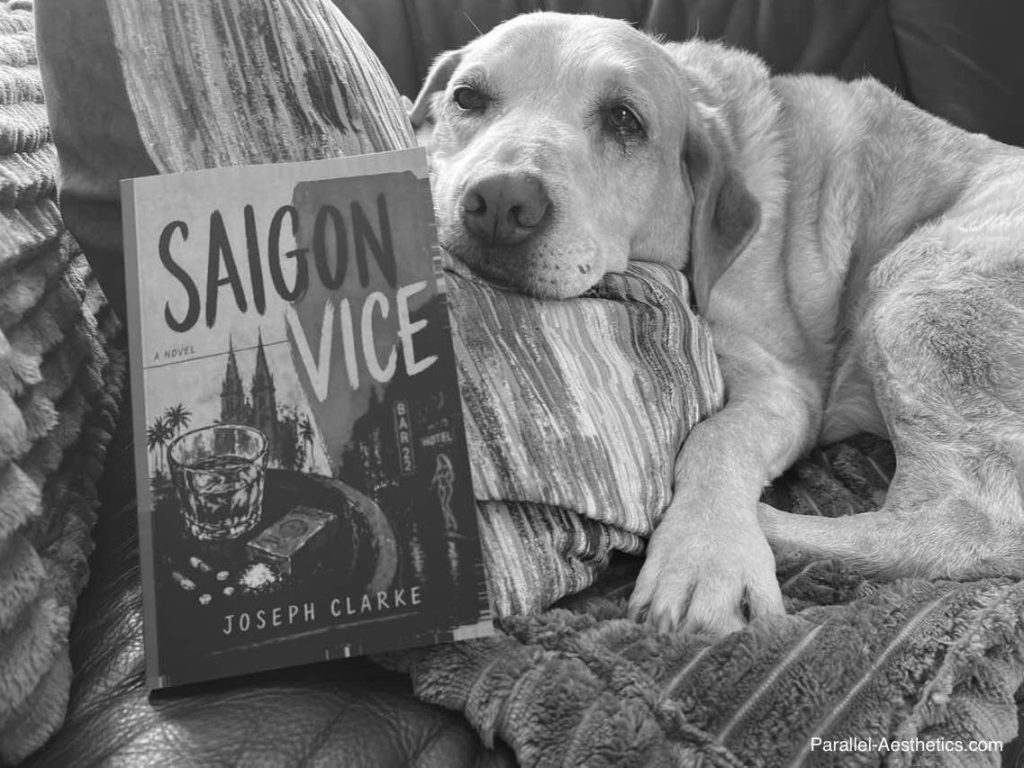
Clarke’s decision to use an AI generated cover acts against him as potential readers may dismiss the book, assuming the text is a computer generated cash grab.
I think it would be an awful shame if a great book like Saigon Vice is overlooked. Don’t judge a book by its cover and order a copy of Saigon Vice.