
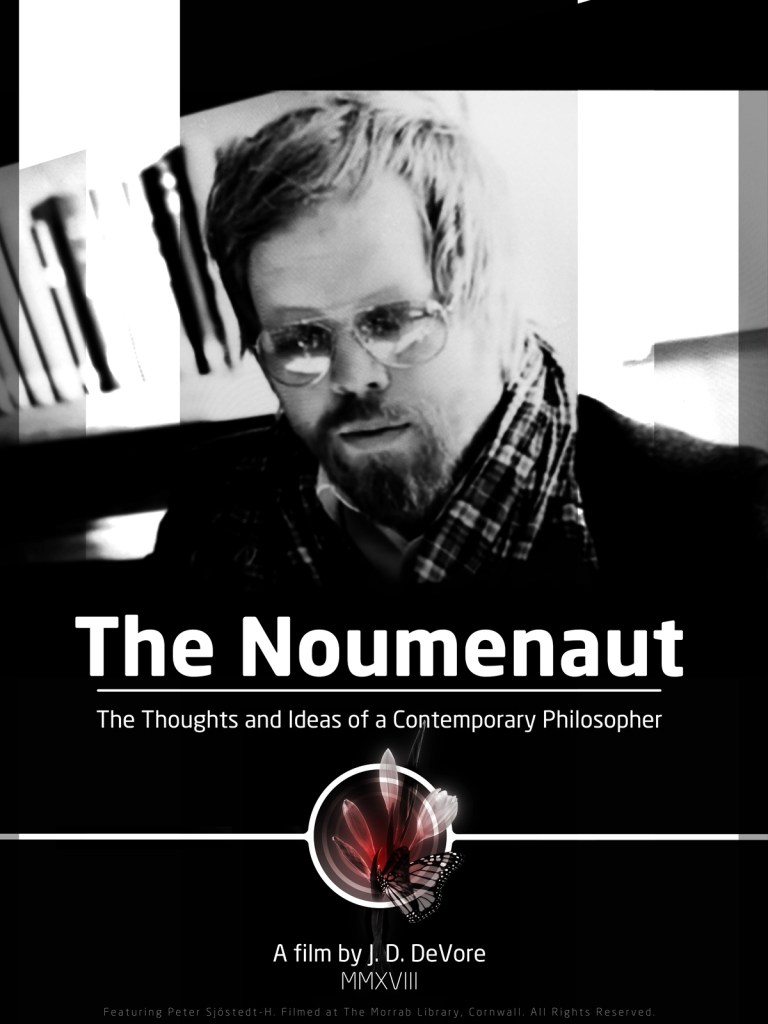
My name is Peter Sjosted-H. I am a philosopher of mind, a metaphysician, a metaphysicist, or ontologist.
Well, as a child, that was known as the little philosopher, so I was always asking questions about the reasons for things, as a lot of children do I suppose.But my father had a number of books on Eastern Philosophy, and I remember one book had in the house called Gnani Yoga and I think that caged my interest, that sparked my interest, but of course in school in Britain one couldn’t do philosophy, so I didn’t really know what philosophy was, I just knew that aspect of it, so I wanted to study that, but then I realised that at the time in the 90s it was very difficult to study Eastern philosophy, there were hardly any courses, so I did Western philosophy and then immediately I realised that this was subject for me. I mean, in school, I was most interested in science and art, sort of unusual combination, I suppose, but in a way, philosophy, it’s that. Its that combination.
So anyway, yeah. So I started reading western philosophy from the ancient Greeks. Plato, onwards, before Plato even… and I became very interested in Kant, Immanuel Kant and Nietzsche I should say, as an undergraduate and I’ve never looked back.
Well, I’ve looked back after my master’s dissertation on Kant and Schelling, where I worked for about maybe 12 hours every day for two months nonstop. I really was put off philosophy. But after that, you know, I’ve always… except for that little gap I’ve always been very interested in Philosophy, still am.
Well, I suppose, Kant, Immanuel Kant, he changed my view of reality really. He was a massive influence on me, especially the first and the third critiques.
The reason, I suppose, was that the way I was brought up in Britain, and in Sweden, partially, I was brought up as a materialist or a machinist. It was never explicitly taught, but implicitly that’s the background ideology, presupposed I suppose, in British and Swedish schools.
So reading Kant was very interesting and changed my world in the sense that it was a critique of materialism. I mean, he was an idealist, so he believed that matter was really…
ultimately, matter was an idea, it wasn’t part of reality or noumena.
At the same time, I was reading Nietzsche, and he probably had more of an influence on me because Nietzsche cut all of the moral assumptions I had – completely overturned my thinking and changed me as a person really. So really Nietzsche, Kant and Nietzsche, completely mind-bending philosophers when you first approach them.
After that, after university I read Schopenhauer, and Schopenhauer was the bridge between Kant and Nietzsche and I realised reading Schopenhauer, how much Nietzsche had actually copied really from Schopenhauer. Schopenhauer in a way was a better philosopher in a sense that he’s more technical, but Nietzsche is more inspiring and Nietzsche did of course advance I should say Schopenhauer’s philosophy from the will to live, from the will to survive, to the will to power. But certainly, for quite a number of years, I was Schopenhauerian. I defined myself that way.
Later on, I became interested in Henri Bergson, the French philosopher, through one of my lectures, Keith Hansel Pearson, also a Nietzschean. He had a huge influence upon me as well in terms of my sort of growing distaste for mechanism and I suppose through the combination of these thinkers I was led to a pan psych-ism which I’m studying now, they led to my interest in Alfred North Whitehead. He’s a sort of… you could say his philosophy is more systematised, Bergson-ism. Whitehead was very much influenced by William James and so I got to William James via Whitehead but also through the theology or the religious philosophy, I was teaching at a college in London. I became acquainted. William James’s work and… Williams had a rather, rather large influence upon me.
I mean, as Whitehead said, “You know, William James hasn’t really got a system of thought but he’s just got a huge collection of interesting thoughts”.
So, at the moment I should say I’m kind of bringing these thinkers together, into what I hope to be ultimately a new philosophy which I call “Power-Process philosophy.”
Did I miss someone now, I’m thinking. Kant, Schopenhauer, Nietzsche, James, Whitehead, Bergson, they’re the main ones.
I mean the Mind Matter problem has been… I mean Schopenhauer says it started with Descartes, the dualist. It’s still unknown or at least it seems no thinkers agree with one another, about what that relationship is. So that’s why I find that interesting because the number of options are high, but ultimately, I think, I suppose it was Kant who got me into philosophy of mind in a sense, because of the notion that everything we see is merely a sort of projection of the mind. Schopenhauer more… maybe with a will as a fundamental essence of all things. Of course I always like to look at Nietzsche from a Schopenhauerian angle and the interest… what interested me the most with Nietzsche, what came to interest me the most was this notion of the will to power, Wille zur Mach, and he was going to publish it, but called “The Will to Power”, however he went mad in 1889 and that was never completed, but there are notebooks.
His late notebooks talk about this concept of the world power. And interestingly, within that,
within those notes and also in published works like Beyond Good and Evil, 36 and the other sections he talks about, and the world power being an effect form a sort of internal aspect of all power or all force.
So within all force, all causality which ultimately is matter energy, the argument was made that year. There is this eminence, this internal sentience as a world, not consciousness, but sentience. A lot of Nietzscheian scholars disagree with that, Maudemarie Clark, but I think it’s there, it’s hinted at.
So I became interested in this idea that within all matter energy, this component of mind. Not fully-blown consciousness, not like human consciousness of course, an element, a basic form of mind and everything.
Through Schopenhauer then, I read Schopenhauer after Nietzsche. He alludes to this inner aspect being will, at a drive, a desire almost. Schopenhauer at one point, spoke about plants having a basic form of mind, basic form of satisfaction.
Bergson also spoke about it in organisms, this element of mind, but it was really… but really through I think Nietzsche and Schopenhauer, I was pushed, and Bergson, into Whitehead.
Whitehead’s known as a pan-experientialist, which is his, Griffin named Whitehead’s version of pan-psychism.
Pan-psychism then is a view that all of reality contains elements of mind and its Whitehead who really comes up with the most systematic account of how that’s possible as displayed most prominently in his book ‘process and reality of 1929.”
Yeah so, really I was led to this notion of pan-psychism ultimately from Nietzsche in count, from Nietzsche to Whitehead, and Whitehead had really put me off Schopenhauer because Schopenhauer’s main work is called “The World’s Will and Representation” and Whitehead has a great argument against representationalism. That what we perceive is actually part of that thing. So with Schopenhauer and representationalism there is the subject who represents the outside world and of course for Kant and Schopenhauer to lesser extent, the outside world is completely unknown, but Whitehead says this is an assumption, really, it’s because the relationship between subject and object,
is not one of external world to representation, but rather of whole-to-part. So in other words, my view of things, my perception of things is actually an aspect and a minor part of those external things. There’s no real dichotomy. No real distinction. So in that sense, I feel like I owe became Schopenhauer. The problem of representationalism is, one of the problems is it will always lead to solipsism, which is, you know, this old view, you that… how do you know that what you see is real?
You know, how do you know you’re not living in a dream or in the matrix or whatever.
Schopenhauer I remember saying somewhere it said, “This is a problem, but it’s like a citadel in a battle, you can’t… you can’t defeat it, you can’t knock it down but you can just walk past it and continue the war.”But a with a way ahead you can knock it down. Interestingly, if you accept what his arguments… so yeah, Whitehead then, I was already on the path to pan-psychism and Whitehead provided a good foundation for it. A good system for it. But there are still a number of issues with that, like the combination problem, pallet problem and so on.
And what I’m looking at at the moment is whether “pan-psychism can provide help towards the problem of mental causation, which afflicts, still a philosophy of mind but, so briefly the problem is this, if we live in a purely physical world, then the implication is, that mind, thought, desires, or reasoning can have no effect upon that world upon yourself.
So if I really spend a lot of mental effort trying to work something out, a mathematical equation, whatever it may be, or Hegel, whatever, whatever.
If I spend a lot of time to work something out, if you’re a pure physicalist, this is very problematic because that meant there should be no direct power from the mind to the body.
[Pause]
But, there seemingly is because if there isn’t, you can ask questions like “Well, why then do we have… why then does mentality, consciousness, sentience exist at all?”.
Karl Popper Spoke about this problem in evolutionary terms. He said the problem with epi-phenomenalism, which is the view that the mind is and epi-phenomena of the body, the brain has no causal influence.
Tomas Huxley came up with a term. He said It’s like steam coming off a train, you know, it’s there, mind is there, but it can’t do anything. The problem with that of course Karl Popper pointed out was that that…well, if it’s the case that mentality has no power, in other words if there is no mental causation why did mentality evolve?
I mean, okay, there exist vestigial organs. But vestigial organs, once have a purpose, but mental, for epi-phenomenalist, mentality could never have had a purpose and not only in humans, of course, we presume that a lot of other animals have mental powers, mammals, at least.
So why did this evolve in numerous animals if it has no impact upon the world at all, it seems, Popper says, anti-evolutionary point of view.
So there’s… interestingly, evolution against physical-ism. The view that only physical entities have powers. So what I’m looking at now is whether pan-psychism can inform this debate. So from a Whiteheadian point of view, and from a Nietzscheian point of view, to a certain extent.
If every element of matter-energy has an aspect of sentience, that means that all physical causation already is mental causation. If that’s the case, then there is not physical causality for forces in nature and mental causality, but rather physical causality already involved mental causality and our misunderstanding is a result of an uninformed view of matter, matter energy. So when we look at this, something Burman Russell spoke about as well.
We have differing concepts of what matter-energy is… but if you look historically, it has evolved, the concept of matter has evolved itself.
I mean, it started with Democrates in ancient Greece, but with Maxell get the addition of electromagnetism so on and so forth. So I don’t think that we’ve reached a sufficient understanding of matter-energy yet, and my view and I think it’s the most plausible view is that the more we understand about matter-energy, the more will understand that sentience is an aspect of it already. And once you accept that, then you’ve more or less accepted pan-psychism. And then the problems of mental causation as opposed to physical causation. Those problems become effaced.
Psychonautics, or Numanautics…well, when I was teaching A level philosophy I was roped into teaching religious studies as well and part of that was teaching the arguments for God, the existence of God. You had the ontological argument, cosmological, teleological, and so on, but there was one.. wasn’t really an argument, but there was one reason for believing in God, that was not based on logic, but rather based on experience, the argument from experience, which is simply that if you’ve had this experience, you know, and that experience is noetic.
In other words the experience itself contains an element of certainty as to its veridicality. Subjective truth.
Anyway, when I was teaching this in my 20s, mid 20s or so, I couldn’t find an argument against it, because as I say… it wasn’t a logical argument.
It was just either you know, or you don’t. At the same time I was reading William James, in particular, “The Varieties of Religious Experience,”where in he talks about the religious experience, or, the mystical experience as being one which can be brought on by the use of chemicals and in this book he starts off with alcohol.
Its the first step in the mystic consciousness, he says and he goes on to ether, of course, William James as famously experimented with nitrous oxide, in fact he said he understood Hegel only after taking copious amounts of nitrous oxide.
Anyway so having read this, I was quite eager to try this experience also, because I was getting into the Philosophy of mind more than I should say and if you really want to understand the mind, obviously, it’s better if you’ve experienced more facets of the mind.
So one day, it was a half term. I was teaching in London, and I returned to my family home in Cornwall, and I was walking through these fields, in November or so with my brother, who was an amateur mycologist, a mushroom expert and he said: “Peter. I think these are magic mushrooms here.” I thought “Really? Well, okay, uh, I’ll just pick some then”
(Laughs)
And I did. There were many, I mean, a hundred or so. And I picked all of those then… and then I took them home and I sort of checked on the Internet whether they were the real, the real deal or so. They were quite distinctive; these Liberty caps that grow around this country.
They were. So I dried then, so I took them back to London and then…I took a small dose, I remember, just to make sure I wouldn’t die and to see a film at the cinema, I can’t remember what it was, but it was this amazing 3D film, but afterwards I discovered it wasn’t actually a 3D film, that was part of the mushrooms kicking in, but it was a low dose.
A week later I took a high dose, a relatively high dose of these liberty caps and it was a life-changing event. Really, it was just so incredible. The experience was so incredible, the first way in which it changed me, is simply to make me realize how powerful the mind can be.
A lot of people when they think of psychedelics, they think of sort of kaleidoscopic colors or what not, patterns, but it’s so much more than that.
I traveled, with eyes closed I traveled, It seemed as if I travelled through space, I met these gigantic spacecraft or were they organisms?
I wasn’t sure, many of them seemed to try to communicate with me,
I remember going through this giant tunnel full of golden cloud at the same time as this incredible visual. I experienced these feelings of eternal bliss and satisfaction.
Unbelievable, I mean, really… something completely different to normal consciousness.
I mean a lot of demonic beings as well.
I had these experiences, I remember, of this wall full of skulls or each of which was surrounded by this sort of luminous blue electric light which were coming towards me and I remember seeing at one point, some huge devil figure. So looking down at me, not talking, but seemingly trying to communicate. It’s a feeling you can’t really explain. The feeling that someone is trying to tell you something without the auditory complement. But anyway, I thought I saw the devil, and then I thought I became the devil and I was quite happy with that and as well as that, I noticed when you study philosophy of mind or psychology, you get these taxonomies of consciousness.
So there are emotions and there are visions, and there are concepts and there’s reasoning, so on and so forth, different levels of attention and what not, but all of that taxonomy was really sort of smashed in many ways by this experience,
I realised that, for example, a visual sensation could, at the same time be a concept and again, William James called mystical experiences ineffable which means there exists no words in which to express these experiences, and that’s pretty obvious because these experiences are not common and so we have a developed language to match them.
But anyway, I realised that taxonomies of consciousness where only a small fragment of the vast possibilities of consciousness.
So then I realised of course that… Okay, here’s a whole new field of inquiry, to pursue in relation to the philosophy of mind.
Realising that, afterwards I went to look at the literature [shuffling]
and I was quite surprised to discover that there is not much philosophical logical literature on psychedelics.
Of course you’ve got the classics, Aldous Huxley’s “Doors of Perception,” “Heaven and Hell”, and so on. But he wasn’t really a philosopher. Philosophers of mind don’t touch it.
Unfortunately, when psychedelics came in to blossom in the ‘1960s and concomitantly the philosophy of mind is very reductivist, so you had a lot of philosophers didn’t even believe in consciousness, you know, behaviorists, functionalists, eliminatists, and so on, identity theorists.
But anyway, consciousness was not seen as a worthy field of inquiry, and so, unfortunately, all these reports from these, you know, at the time, hippies, whatever, psychedelic experiences were, for the most part, not always, but for the most part, ignored.
But now we’re witnessing the so-called Renaissance and psychedelic studies, and concurrent with that in the philosophy of mind, we have various different theories as to how mind and matter are related.
Reason being all the former ones have sort of reached an impasse.
So now, I think, you know, there’s… we’re much more open to possibilities of analysis with regard to psychedelics and this is what I’m hoping to contribute to slightly.
So my book Numanautics introduces the reader to psychedelic experiences, psychedelic consciousness, in relation to different philosophies of mind. I’ve applied Whitehead’s philosophy to it, in a couple of articles.
But there’s still so much more to be analyzed, so much more out there,
so it’s a very exciting new field of philosophy, really.
The psychedelic history of philosophy. well, part of my crusade to make psychedelic experience more of an interest to other philosophers, psychologists, and so on… part of that crusade was to highlight great philosophers of the past who might have used psychedelics.
So I did the research and it seemed most likely that this all started in ancient Greece with Plato… well, before Plato, but famously from Plato, because Plato and Aristotle and on… most Athenians attended these mystery festivals in Eleusis, which is a sort of a little town thirteen miles or so from Athens.
In ancient Greece, two and a half, three thousand years ago, once year there was the lesser and the greater festivals, and in these mystery festivals, a potion had to be drunk just before the final phase, and that potion was called the kykeon and it ostensibly consisted of barley water and mint. But there was a specific dose of this potion to be drunk and after the potion was drunk, from the history, the reports we have of these festivals, they were mystery festivals, so they were not really supposed to be spoken of. But the reports we have always speak of the visions, people have in this Dark Temple, Temple of Demeter and Plato himself in a book called “Phaedo: on the Soul”, he writes about these mysterious apparitions he has seen just before he introduces what he is traditionally famous for, which is the notion of substance dualism: the distinction between the body and soul and his idea of the forms or ideas in other words, a transcendent realm, beyond space and time, which contained the pure ideas such as beauty, justice, truth, and so on.
Anyway, so it seemed that Plato also said that he wanted to be included or counted amongst the followers of Dionysus, in other words, the true mystics. So it seemed as if… seems more likely than not that Plato had these psychedelic visions. And what the actual chemical was is unknown, but Albert Hofmann, who created LSD, he claims it was probably ergot, which is a parasitic fungus growing on wheat and barley and so on, and next to the Eleusinian mysteries, there was this Rarian plain full of barley. So he said it was very likely that this contained this element of ergot, which is, the basis of LSD, and this was responsible for the visions thereafter in the mystery festival.
But you know, other people say it wasn’t ergot, it was something else. Another chemical, I don’t know, but like I said, it’s more likely than not that it was a psychedelic compound, thus in Plato, we see that these visions, experience, probably from a psychedelic compound, inspired his substance dualism, and theory of forms and Alfred North Whitehead is most famous for saying that all of western philosophy is a series of footnotes to Plato. So when you put those two together, you realise that western philosophy… it’s very likely that Western philosophy was triggered by psychedelic intake. At least that’s my conjecture.
So we start with the Ancient Greeks, the Eleusinian mysteries were closed down by a Christian emperor, Roman Emperor, Theodosius in the late fourth century.
Then we had Christian rule the Dark Ages, and you had a number of theologians talking about mystical states, of course. But in terms of philosophy, there’s really a return to psychedelics or mystical consciousness, you could say with Humphry Davy… a penzance man, were now in penzance… Humphry Davy has a chair in this very library, but Humphry Davy in 1800, he published a book on nitrous oxide and it seemed to inspire Humphry Davy, an idealist point of view, no doubt with Kantian influences, you know, Kant’s transcendental idealism was becoming popular then.
Humphry Davy himself called himself a chemical philosopher. So in that sense, he was a sort of first modern psychonaut.
Psychonaut term coined by Ernst Jünger, 1970.
So, Humphry Davy speaks about the joys bequeathed by nitrous oxide, laughing gas, which is a psychedelic. Thereafter you have other philosophers interested in it.
I mean, Schopenhauer never spoke about that explicitly except for saying that wine and opium can induce creativity. Opium in high doses can be psychedelic and induce visions.
Concomitantly, there was Thomas De Quincey, who wrote “Confessions of an English Opium Eater”, where he talks about these great visions inspired by opium in his dreams.
He was, Thomas De Quincey was one of the first English commentators on Kant, so we see the beginnings of psychedelic philosophy there.
As we go forward in time, well, we get thinkers such as William James, like I said, he wrote about the mystical state and the varieties of religious experience, the first element of it being brought on by alcohol and ether then nitrous oxide, and he wrote a number of articles about his experiences with nitrous oxide.
Interestingly, with James, one of its later books, 1909, “A Pluralistic Universe”, in that laterbook, he became a fully fledged pan psychist, following the thoughts of Lequier, Bergson, Hegel to a certain extent and it seems as if there’s one passage where he talks about religious experiences as being intuitions of this pan psychism, something else I’m looking out at the moment whether psychedelic consciousness can put forward a certain ontology.
Patrick lundborg he wrote… quite a few years ago, but he wrote that psychedelic experiences sort of inculcate a kind of Pantheism, interestingly.
But anyway, so you had William James harping on about the great qualities of chemically-induced experiences, the word psychedelic hadn’t been coined then. That was coined later by Humphry Osmond, in the mid-20th century.
[Pause]
We see a lot of drug use, psychoactive drug use in the works of Frederick Nietzsche, which I can speak about separately, in a moment. Opium, chlorohydrates and so on.
Coming to the 20th century, we see for example, Ernst Jünger famously, he was a very good friend of Albert Hofmann, again, the LSD creator, like I said, he coined the term psychonaut in the book of 1970 drugs and intoxication, Jünger talks about the insights that can be had from LSD, and Psilocybin and so on.
Albert Hofmann devotes a entire chapter towards ** thoughts in his book, “LSD My Problem Child.”
Jünger was a controversial figure, he was a decorated captain in the First World War, German.
He was… no, not a Captain in the First World War, soldier, but I think he was a captain in the Second World War, for the Nazis, although he was loosely involved with the assassination attempt on Hitler.
But anyway, he was a bit elitist on psychedelics and thought… he said against Aldous Huxley,
He thought drugs should not be given to the masses, the truth is they can reveal… they can be quite dangerous and should only be for the few.
Walter Benjamin also wrote books on Hashish. He died during the Second World War, possibly from a morphine overdose.
Interestingly, Walter Benjamin had an experience, based on mescaline I think, about Nietzsche’s sister. Nietzsche’s infamous sister.
But his writings on mescaline and cannabis were never systematically written… but there is a book On Hashish from him, which is posthumous.
Foucault wrote about LSD to a certain extent, 1970, I think. Deleuze, Guattari in a negative way.
Foucault planned to write a book on drug use in the West, but he died unfortunately before that came to fruition.
A.J. Ayer Interestingly, the kind of Richard Dawkins atheist-type figure of his age. He died in 1989, I think. To my knowledge, never took psychedelics, he did have a psychedelic-like experience, which was a near death experience, where he said he saw two figures trying to put together the framework of space and time, and interestingly, he wrote an article on The Telegraph about it, saying that although it doesn’t make him a theist in any sense, it has now made him question whether death is the end of consciousness.
So I think that, in a way, when you read his report, that it could have been a psychedelic experience. It was obviously the same kind of thing, just induced in a different manner, hypothermia I think. But if a psychedelic experience could make A.J. Ayer of all people radically changes views on the afterlife like that, then that’s just indicative of the potency of these chemicals in philosophy.
Yeah so, A.J. Ayer died in 1989. Then there isn’t much really in the modern ages, I mean, I’ve said Patrick Lundborg, who was a sort of home-grown philosopher, he wrote a great book called “Psychedelia”.
But then, like I said, this is a young field, a young science, wissenschaft, and the best is yet to come.
I was quite interested to learn about Nietzsche’s use of psychoactive drugs,
which seems to be an ignored aspect of his thought.
Again, to reignite the debate about psychedelics and philosophy, I looked into into his use and discovered… what I discovered was rather surprising really.
So, Nietzsche’s father died when Nietzsche was very young, a boy of five, of softening of the brain, whatever that was, at the time and Nietzsche teenager became very myopic and suffered a lot of migraines and as a result was put on medication from an early age. And these ailments plagued him for the rest of his life and some people believe that… most people, really, believe he went mad in 1899 due to Syphilis.
But this is questioned a lot now, some people say it was brain cancer, which might have been softening of the brain…
Nietzsche’s own sister and mother claimed it was due to abuse of drugs.
So I looked into this. So Nietzsche started taking a lot of opium, he wrote to his friends, Lou Salomé and Paul Ray, that he had overdosed on Opium and made him come to reason.
He took a lot of opium. Lou Salomé said that “Zarathustra”, his main work really, I mean, Nietzsche always claimed that was his main work, was very much inspired by his Opium dreams.
So there you have an example of where, again, if you include Opium as a psychedelic, and certainly if you look at Thomas De Quincy, you would agree that Opium induced dreams are certainly analogous to psychedelic experiences, then you see that the book “Zarathustra” was highly indebted to psychoactive intake.
Nietzsche was also a heavy user of chloral… and mixed with water, that’s chlorohydrate, which he mixed with potassium bromide and interestingly, this was a concoction also taken by the English writer, Evelyn War, who wrote a sort of semi-autobiography called “The Ordeal of Gilbert Pinfold”, which was his, or Pinfold’s experience of being on a ship, and hallucinating that people were trying to kill him, and so on, and seeing things, hearing things that weren’t there.
This was brought on by the same drugs that Nietzsche was on. There’s an account by one of Nietzsche’s female companions, of how when she went to his house, Sils-Maria, she found him white as a ghost, leaning on a wall, saying that flowers where en circulating his body.
She also said that as a doctor, and Nietzsche was a doctor of philology, but as a doctor he could go into any pharmacy and acquire any drug he wanted, and he did.
And Nietzsche says that he was always surprised that no pharmacist ever asked and whether he was actually a medical doctor.
Nonetheless, all the drugs available at the time in the late 19th century, at least in Switzerland and Italy, in Europe, Basically, were available to him, so we don’t know exactly what he took, but we know at least he took, like I say, Opium, potassium bromide, Chlorohydrate.
His sister also speaks about a Javanese narcotic that he took, which, if true, would most likely have consisted or the act development would have been cocaine.
So here we have a man who was terribly afflicted by migraines and poor vision and what not, who tried to alleviate these symptoms through the use and mixture of a number of psychoactive drugs.
These drugs I argue inspired his philosophy to certain extent, like “Zarathustra”. He also writes about poppies, opium in the Joyous Science.
He also talks about having inspiration in terms of hearing a voice, giving him ideas. Auditory hallucinations in other words.
He also, of course, begins his whole philosophical career about writing about the joys of intoxication in the birth of tragedy, and that book of course, features, the god Dionysus, the God of intoxication.
Dionysus returns to Nietzsche in his later works. I mean, the last sentence of his autobiography says:
“Have I been understood? Dionysus against the crucified.”
He came to say in his letters, “I am Dionysus.”
Dionysus, as I say, god of intoxication. He was a disciple thereof, and so the fact that he took drugs, which influenced that philosophy, should not really surprise us.
But it does surprise a number of people, because there was this feeling that a number of allegations had been made against Nietzsche’s later works that they were the work of a mad man, like I say, he fell into cognitive decline in 1889, died in 1900. A lot of people say that we should dismiss his later works because he was mad at that point already.
and so, the notion that he was also intoxicated by a concoction of drugs was a sort of no no for people defending Nietzsche.
So that’s why I believe that his drug use was not really investigated thoroughly.
But I wrote an essay about it, and that is a chapter in my book, “Numanautics”
so… more information there.
Neo-nihilism. Its text, I wrote, It’s a book in its own right, but it’s also chapter in “Numanautics”.
Its a book I wrote, or a text I wrote a number of years ago.
At the time I was studying a lot of 20th century meta-ethics people like Stephenson, Mackie, And as always, I was reading Nietzsche, Schopenhauer, and others, David Hume.
And I had read this book called “Might is Right” by Ragnar Redbeard, which is, although it’s a bit crazy in parts… parts on cannibalism for example… the style was very powerful.
So I thought I’d try to emulate something like that style, also incorporating a bit of Nietzsche’s style, and Schopenhauer himself wrote about style, writing style, so I thought I’d try to sort of incorporate all of this into one concise text, and that text then was Neo-Nihilism the philosophy of power. Its purpose is… its ultimate purpose, which is not moral, is to try to show that all moral propositions, such as you ought to do this or you ought not to do that, can never be factual and I did this by incorporating tools such as Hume’s Is-Ought gap.
I then looked at Schopenhauer’s view on ethics. Schopenhauer is very interesting because although he was a Kantian in terms of ontology, he absolutely rejected Kant’s Deontology, his moral theory. In fact, I think Schopenhauer’s criticism of Deontology is fatal.
Ultimately, it’s this that a categorical imperative, as Kant calls a proposition such as you ought not to break promises, always such a proposition must always imply an “If clause.”
In other words, an end. So one never ought to break a promise, if one wants to be trusted for example.
But in all cases of a prescriptive moral proposition such as that, always there is implied the “If clause”, even if it’s unspoken of or denied, even, as a Kant denies it.
He calls such categorical imperatives as opposed to hypothetical imperatives.
So Schopenhauer said any time you try to say a person ought to do this or ought not to do that, you’re really trying to force that person to act according to your own will.
That’s what it comes down to. Nonetheless, Schopenhauer, although he said there’s no such thing as prescriptive morality or normative morality, nonetheless, he pushed his descriptive morality, which is simply that although you can’t logically tell people what they ought to do, nonetheless you can still admire people’s qualities, their compassion, and what not. But people are born this way. It’s nothing they can change, according to Schopenhauer.
Now, interestingly, Schopenhauer also uses the term “slave morals” which Nietzsche came to be known for, but although Nietzsche was very much inspired, I believe, by Schopenhauer’s critique of Kant’s Ethical Theory, Nietzsche nonetheless advanced it himself
in that he also thought Schopenhauer’s descriptive theory was based on a legacy of Christianity, or Christian morals, slave morals.
I mean, ultimately, Schopenhauer said that all these prescriptions come from theological imperatives: thou shalt do this, thou shalt not do this, the commandments.
God, ultimately… so when Nietzsche said god is dead,
It meant that if you don’t believe in God as the substantiation of moral facts, then you have no right to believe in Christian morality, and for Nietzsche, Western morality as we know it is Christian morality.
Even if you’re an atheist, in most cases, you will still push a Christian morality.
So Nietzsche went one step further than Schopenhauer by saying that even your descriptive morality then has Christian assumptions and that’s why Nietzsche said, “I am not a man, I am dynamite.” Because he was the first person to really criticise morality from its core.
Morality as we know it. So this, in a sense, leads one into a nihilism.
Nietzsche had different… you can call Nietzsche a nihilist or you can call Nietzsche an anti-nihilist… it depends what you mean by nihilism…
Nietzsche speaks about active and passive nihilism for example… but nonetheless, in Neo-Nihilism I’m talking about active nihilism, the sort of destruction of common morals.
So I tried to put this in a concise fashion in this hyperbole, in the book. And then one thing I did to differentiate it from modern Non-Cognitivism or Error Theory or whatever, is to say that these moral prescriptions these propositions are ultimately based on power incentives. This is the real driving force, which is mostly subconscious. Power. And in order to substantiate that, I had to bring in Nietzsche’s theory of the will to power as the core element of reality.
And so I wrote… this is about to 12-13,000 words.
I published it online just to find out how that works even. It sold.
It sold a bit here and there. I was pleased for that. One day suddenly I had a massive spike in sales, and I had no idea why… about a week later I’d discovered that writer *** is quite a famous writer for Marvel Comics, and DC, and and so on.
He had reviewed the book in his blog or newsletter or something… and yeah, this led to this spike in sales.
Psychedelic experience, or psychedelic phenomena, and its study psychedelic phenomenology, has in our culture, traditionally been deprecatingly deemed as a risk-laiden dice for death or madness, or, country-wise, yet impudently as a comical quirky brain epiphenomenon of little consequence. Both approaches to psychedelic phenomena are woefully wrongful roots and block its true significance.
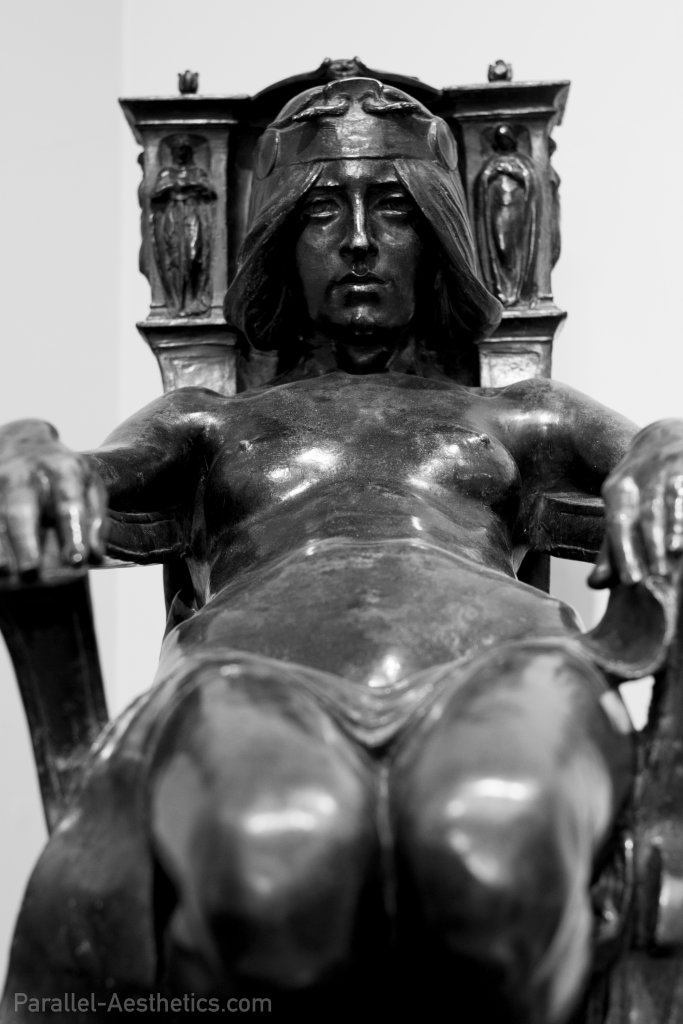
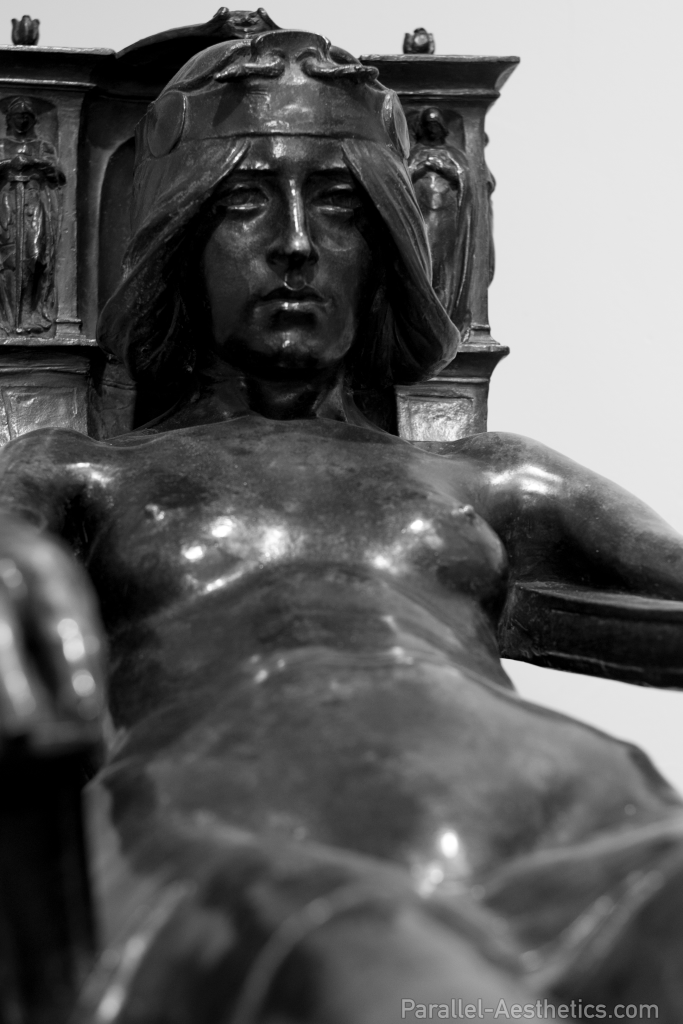
Psychedelic phenomenology can be an experience of inhuman aesthetic heights, which embraces the sublime and the beautiful, and can transcend to dimensions still further.
Psychedelics hazard to our health is minimal. The history of the prohibition, and condemnation grounded not in wisdom, but in politics.





 Parallel Aesthetics